Thinking about building an ADU or in-law suite in Wilmington? Here are 8 things to know—costs, zoning, rentals, permits, and more.
More families in Wilmington are asking a new kind of housing question:
Can we create more space for the people we love—without sacrificing privacy, comfort, or long-term value?
The answer is yes. And the solution is often an in-law suite or ADU (Accessory Dwelling Unit).
Whether you’re caring for aging parents, helping adult kids transition, or looking to generate rental income, these small-scale additions offer outsized benefits—if you plan with clarity. Here are 8 things to know before you build.
1. In-Law Suites and ADUs Aren’t the Same
In-law suites are typically attached to your main home—think finished basements, converted garages, or side-wing additions. They may include a bedroom, bathroom, and small kitchenette, but they usually share walls and utilities with the main house.
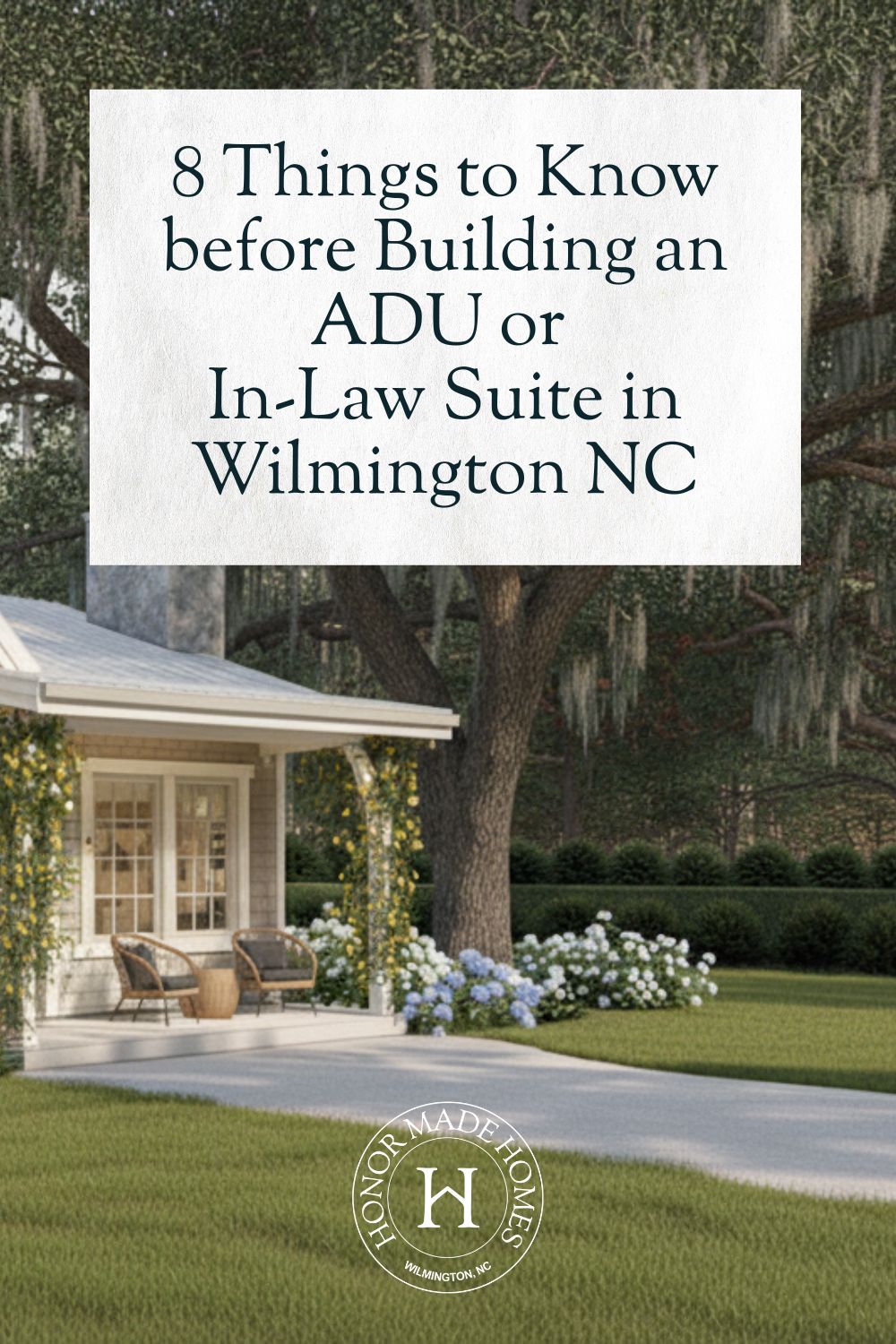
ADUs (Accessory Dwelling Units) are independent structures on the same property. They’re self-contained, often with a full kitchen, bath, and separate entrance. Think: backyard cottage, carriage house, or detached studio.
Want the legal definitions? Check the City of Wilmington’s ADU zoning guide.
2. There Are Zoning Rules You Need to Know about ADUs and In-Law Suites in Wilmington, NC
Wilmington allows ADUs in many residential zones, but the specifics vary by district. Common restrictions include:
- Maximum size limits (often 800–1,200 sq ft)
- Setback and height restrictions
- One ADU per lot
- Parking space requirements
- Whether detached units are allowed in your zone
Always check your zoning classification before you build. You can look up your parcel’s zoning via the Wilmington GIS zoning map.
3. These Spaces Add Flexibility for Modern Living
In-law suites and ADUs aren’t just for aging parents (though they’re great for that too). Wilmington homeowners are using them as:
- Guest houses or short-term rentals
- Home offices or creative studios
- Teen or young adult living space
- Future caregiver or aging-in-place plans
This kind of flexibility is part of what makes ADUs so appealing for multigenerational households. For more, check out the AARP guide to ADUs, a great resource on livability and aging.
4. You’ll Need Permits and a Plan to build an ADU or In-Law Suite in Wilmington, NC
These projects may be small in square footage, but they aren’t simple. You’ll need:
- Site plans and architectural drawings
- Structural and code reviews
- Full building permits
- City inspections throughout the build
This is especially important if you’re considering doing it yourself. The North Carolina Residential Code for One- and Two-Family Dwellings outlines requirements for egress, energy, electrical, and plumbing that must be met to pass inspection.
Working with a builder who knows Wilmington’s permitting process can save months—and thousands.
5. They’re Not Cheap, But They Can Pay You Back
Here’s a local cost range based on current projects in the Cape Fear region:
| Type | Estimated Cost Range |
|---|---|
| Attached In-Law Suite | $80,000 – $150,000 |
| Detached ADU (400–800 sf) | $150,000 – $250,000+ |
Variables that influence cost include foundation work, site prep, utility tie-ins, hurricane code upgrades, and finish level. For national context, HomeAdvisor’s ADU cost guide is a helpful benchmark—but local data matters more.
6. You Can Rent Them—But Know the Rules
Long-term rentals are permitted in most cases. Short-term rentals (like Airbnb) have more restrictions.
As of this writing, Wilmington requires STR owners to register and comply with zoning and occupancy rules. You can review the Wilmington short-term rental ordinance here.
If rental income is part of your ADU strategy, we’ll help you design a layout that meets those codes and maximizes ROI.
7. Not Everyone Should Build One—But You Might Be the Right Fit
We recommend ADUs or in-law suites if you:
- Want to care for aging family members without sharing a kitchen
- Are planning to age in place and want caregiver space in the future
- Need private, functional work-from-home space
- Are looking for long-term rental or resale value boosts
- Have a property that allows for a simple build with minimal grading
It’s not right for everyone—but if you check one of these boxes, it could be one of the best investments you make.
8. You Don’t Have to Figure This Out Alone
We design and build custom homes and spaces throughout Wilmington with a clear, calm, and transparent approach. Our Honor Framework walks you through every step of the ADU process:
- Zoning and feasibility review
- Lot planning and code compliance
- Design and material selection
- Full permitting and build execution
We’ve helped clients create everything from guest-ready ADUs to future-focused aging-in-place suites—all with transparency, respect, and design that works for real life.
As Jonny Hinson puts it:
“Designing for family means designing for flexibility. That’s the beauty of ADUs—what starts as a guest house might become a studio, a rental, or a place to help your parents age with dignity.”
Thinking about building an ADU or in-law suite in Wilmington?
Let’s start with a conversation. We’ll help you understand your zoning, your options, and what’s possible on your lot.
→ Book a free ADU Planning Call
FAQs
Are ADUs legal in Wilmington, NC?
Yes, in many zones. Detached ADUs are permitted in R-7 and R-10, among others, subject to lot and size restrictions.
How much does it cost to build an ADU or in-law suite in Wilmington, NC?
Attached suites range from $80K–$150K. Detached ADUs usually fall between $150K–$250K+, depending on scope.
Can I rent out my ADU in Wilmington, NC?
Yes for long-term tenants. Short-term rentals require city registration and zoning compliance. Rules vary by neighborhood and HOA.
Can I DIY an ADU in Wilmington, NC?
You can try—but you’ll still need stamped plans, permits, and inspections. A builder helps you avoid rework, delays, and code violations.